
When a Child Is Extremely Verbal but Socially Struggling: Could It Be Nonverbal Learning Disability?
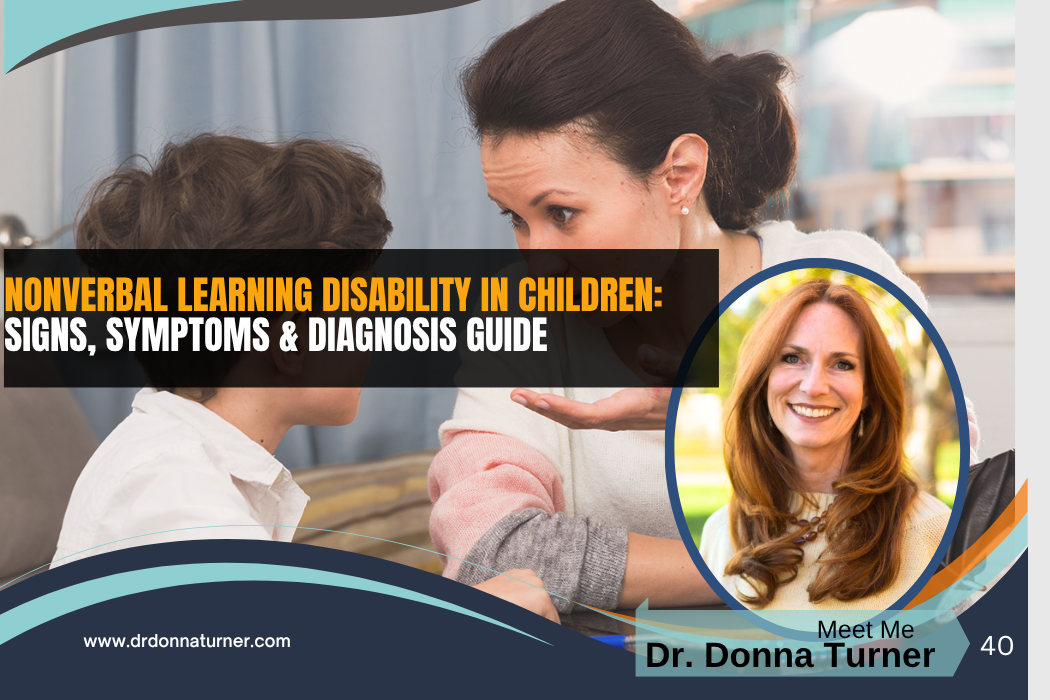
When a child speaks with great clarity but has difficulty connecting socially, it can be both astounding and perplexing. Many parents define their kid as intelligent, expressive, and eloquent, someone able to engage in extended talks and utilize complex language. Still, something feels incorrect in social situations, even with all these advantages.
Maybe your child struggles to make friends, misinterprets jokes, or dominates discussions unconsciously. You might be thinking, "My child talks a lot but struggles socially, why?" This pattern may indicate a less well-known condition in many circumstances: nonverbal learning disability. Knowing this ailment will enable you to grasp your child's experiences and point you toward the appropriate kind of assistance.
What is Nonverbal Learning Disability?
First, investigate what exactly is this disorder is to grasp what your child could be going through. Although the name suggests otherwise, this condition has little bearing on speaking skills. Actually, kids with nonverbal learning disabilities sometimes have very verbal skills.
A neurological disease called NVLD changes a child's interpretation and processing of nonverbal information. This covers social context, spatial awareness, voice tone, body language, and facial expressions. Although they could succeed in language-based assignments like reading and speaking, they might find it difficult to "read between the lines" in social encounters.
Unlike other learning disabilities in children that mostly affect reading or writing, NVLD mostly influences visual-spatial reasoning and social awareness. This produces a clear difference between what they can interpret and what they can say.
The Confused Pattern: Strong Language, Poor Social Skills
The disparity between verbal strength and social challenges is among the most distinguishing aspects of nonverbal learning disorder in children. Though seem confident and capable, a highly verbal kid with social challenges may still have trouble managing daily interactions.
These kids often like conversing and may speak at length about subjects they love. Still, they could overlook delicate signals that direct discussions, for instance, when someone wishes to speak, when a joke is being told, or when a listener is becoming disinterested.
This might cause the child to accidentally take control of dialogues or act in seemingly unrelated circumstances. These misinterpretations can, over time, cause child social skills problems, therefore complicating the child's ability to create and keep relationships.
Identifying Symptoms of NVLD in Kids
Finding NVLD symptoms in children calls for looking beyond school achievement and noting behavioral and social patterns. NVLD children sometimes have continuing social difficulties. Although they might wish to interact with other people, they have trouble seeing how. Group interactions might illuminate how challenging it is to read nonverbal cues; friendships might feel erratic or ambiguous. Consequently, they could seem uncomfortable, unduly chatty, or unaware of social constraints.
Their academic record may seem inconsistent at the same time. Many kids with nonverbal learning disability have excellent reading and verbal memory abilities; they sometimes succeed in subjects dependent on language. They could have difficulty with chores requiring visual-spatial processing, though, including mathematical problem-solving, graph interpreting, or work organization.
These obstacles can be emotionally draining. Children may become angry when they are misinterpreted or when social circumstances do not turn out as intended. Particularly in settings where social contact is continuous, anxiety can arise. Though they are sometimes misinterpreted for personality or behavioral characteristics, these patterns are usually important signs of NVLD in kids.
NVLD vs. Autism: Why the Differences Matter
It’s common for parents to wonder about NVLD vs autism, as both conditions can involve social difficulties. While there are similarities, the underlying patterns are different. Children with NVLD often have a strong desire to be socially engaged, even if they have trouble doing so successfully and have strong verbal skills. Conversely, autism spectrum disorders usually include wider deviations in sensory processing, behavior, and communication, and language development could be delayed or aberrant. Because the variations can be small, a thorough assessment is crucial. Knowing if a child has autism, nonverbal learning disability, or another disorder helps to guarantee the right and efficient support they get.
Importance of a Precise Diagnosis
Children with NVLD are frequently misunderstood unless they have enough knowledge. Their conduct can be termed as arrogant, extremely talkative, or distracted. These activities actually stem from a struggle to understand nonverbal communication. Formal nonverbal learning disability diagnosis helps to clear things. It changes the viewpoint from “something is wrong” to "this is how your child processes the world". For both parents and children, that change may be very empowering.
This is when it's necessary to work with a neuropsychology expert. Specialists can assess a wide spectrum of cognitive and social abilities using thorough neuropsychological testing for children. These evaluations direct a customized support plan, identify strengths and challenges, and help.
How NVLD Impacts Daily Life
Usually, going into everyday activities, the impacts of nonverbal learning disorder in children affect a kid's experiences in school, home life, and social contexts. At school, tasks requiring visual interpretation or organizing could be challenging for kids. Because they demand both cooperation and social awareness, group projects can be especially difficult. These extra expectations might get in the way even if a child understands the academic content.
Parents at home might notice constant disagreements. A child may misunderstand tone or intention, which causes frustration or disorientation. Changes in routine can also be hard since predictability often offers a degree of safety.
Most obvious socially is the effect. A highly verbal child having social difficulties may not get noticed when others are disengaged or misinterpret the emotional tone of a chat. This might eventually undermine self-assurance and friendships, thereby strengthening the cycle of social skills problems in children.
NVLD Treatment: Building Skills and Confidence
Good NVLD treatment for children tries to foster the child's emotional well-being and to teach them realistic abilities. A core element is the development of social skills. Children can pick up how to read social signals, conduct balanced talks, and fit into various social situations. Often, these abilities must be taught specifically rather than picked up naturally.
Emotional assistance is equally important. Many kids gain from techniques to control anxiety, develop resiliency, and negotiate difficult circumstances. Many times, their confidence increases as they start to make sense of their experiences. Customized support can have a big influence in academic environments. Verbal directions, set routines, and precise expectations close the gap produced by visual-spatial difficulties.
When Should One Ask for Assistance?
You could need to look more closely if your child is very vocal but still struggles with ongoing social skills difficulties. Signs that nonverbal learning disability assessment could be helpful are difficulty deciphering nonverbal communication, sporadic school achievement, and social anxiety. As a parent, you must trust your instincts. Looking for expert advice will help you clarify and direct if anything doesn't feel absolutely right.
Take the Next Step
The turning point from uncertainty to clarity could be knowing what a nonverbal learning disability is. Children with NVLD can flourish intellectually, emotionally, and socially, given the correct insights and assistance.
Should you see these behaviors in your kid, think about moving on. Book a child learning disability assessment to better grasp your child's obstacles and capabilities. Collaborating with a trained child neuropsychology specialist like Dr. Donna Turner guarantees your child gets individualized, professional attention. Early detection and appropriate support can make all the difference, helping your child not only negotiate the world more confidently but also really excel in it.