
Digital Overload and Learning Disabilities: Why Neurodivergent Students Burn Out Faster Online
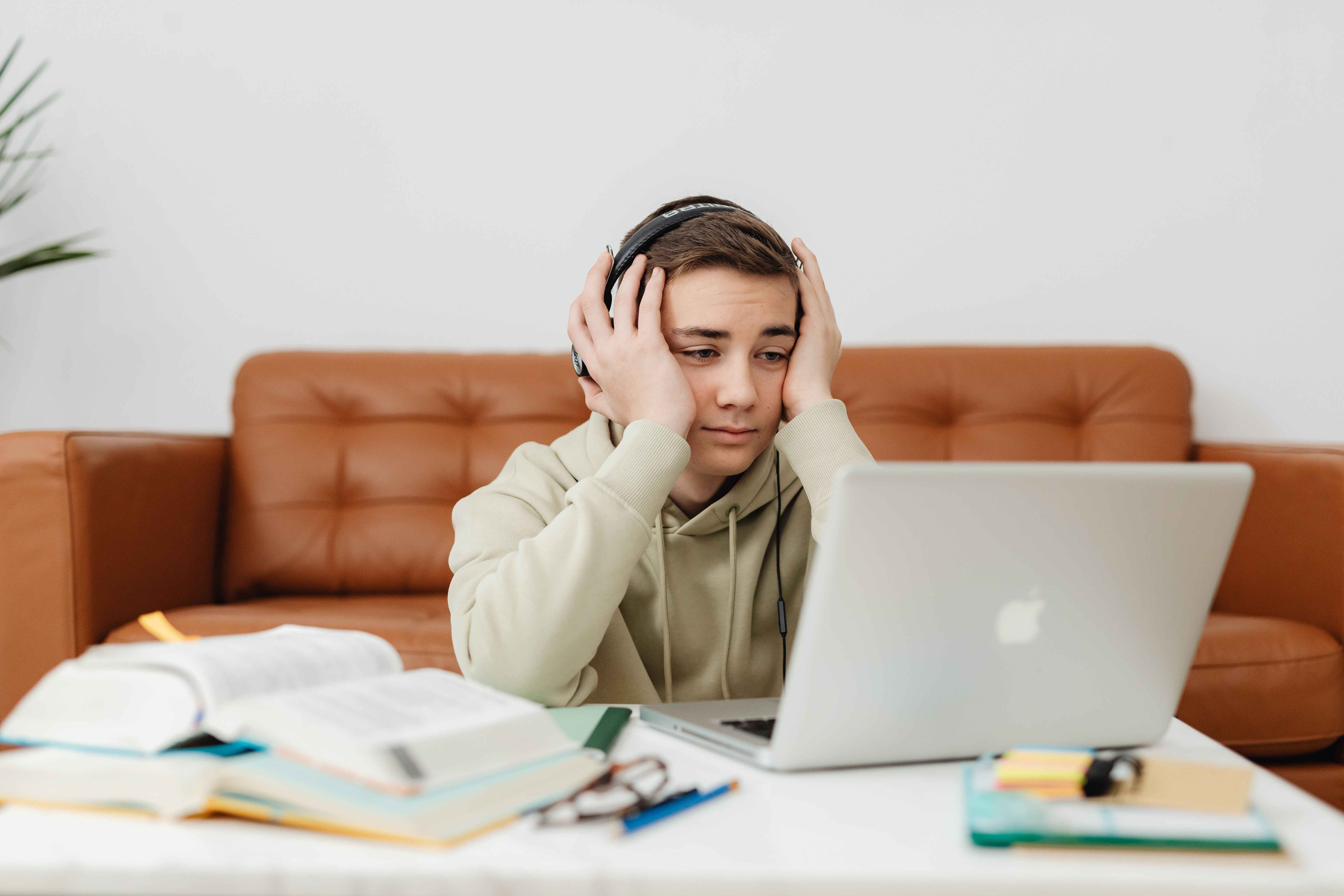
Research suggests neurodivergent student burnout online comes less from screen time itself and more from the extra mental work digital learning demands. Students with ADHD or learning disabilities may be reading, listening, typing, organizing, and juggling platforms and notifications all at once. When that load never lets up, exhaustion, avoidance, and slipping grades can follow.
Picture a student at the kitchen table at nine at night. The assignment is open in one tab, the class chat is pinging in another, and a reminder just popped up for something due tomorrow. She understands the material. She's just out of fuel. Parents often read that as laziness, and the student often reads it as proof that something is wrong with them.
This blog looks at why student burnout hits students with learning disabilities and ADHD so hard, what the signs look like, and what actually helps. One caution first: the research on online learning and learning disabilities is young, and much of it comes from small studies of college students. We'll be clear about where we're reasoning from what it suggests.
What Digital Overload Means for a Student With a Learning Disability
Digital overload isn't just too much screen time. It's the combined weight of devices, platforms, notifications, deadlines, and self-managed work that many students carry every day. One assignment can involve a learning portal, a video lesson, a shared document, a messaging app, and an email thread.
For a student with dyslexia, dysgraphia, ADHD, or another learning difference, many of those steps lean on skills like processing speed and executive function that are already effortful: reading on a screen, typing, planning, remembering what's due, and switching between tasks. Each one costs a little more energy than it costs a classmate. Screen fatigue and dyslexia can go hand in hand, since long stretches of on-screen reading are harder for students who read with effort.
Interviews about the digital fatigue neurodivergent students experience found that exhaustion came less from the hours spent online and more from complicated interfaces, competing notifications, unclear online messages, and constant switching between ways of working. Even tools meant to help, like captions and digital planners, added to the load when students had to manage them all.
Why Online Learning Fuels Neurodivergent Student Burnout
Psychologists call the effort of handling information in the moment cognitive load, and cognitive load in online learning can add up fast. Working memory, the mental notepad that holds a few things at once, can only carry so much. When the setup of a lesson uses up that space, there's less left for learning.
In one focus group study, neurodivergent students reported more trouble than their peers with reading, listening, watching, and writing online. Doing several at once, like taking notes during a live lecture, felt overwhelming. The researchers suggested the online format may overtax working memory, and long lectures were especially draining.
One finding stands out. Neurodivergent students tended to blame their own traits for these struggles, while neurotypical students more often blamed the setup. The students with the most to gain from better design were the most likely to assume the problem was them.
A separate set of interviews with 11 neurodivergent students at a UK university described a lot of "invisible work," the extra effort spent getting around digital systems built for a typical learner. These studies are small and focus on college students, so we shouldn't overstate them. But the same demands behind neurodivergent student burnout apply to younger students, and they match what many families tell us.
Signs of Digital Burnout in Students at Home and at School
Burnout rarely announces itself. It tends to arrive as a slow change in how a student feels about school and screens. Here's what it can look like.
At home
-
Dread, tears, or meltdowns when it's time to open the laptop
-
Hours of homework that produce very little
-
Irritability or shutting down after screen work
-
Pulling away from activities they used to enjoy
-
Late nights catching up, then a rough next day
At school
-
Missing or late assignments even though they understand the material
-
Skipping online classes or avoiding logging in
-
Grades that don't match their ability
-
Giving up quickly, or trouble getting started
-
Negative self-talk like "I'm just stupid"
No single sign means burnout, and several overlap with anxiety, depression, and ADHD. The pattern is what matters: a student who is trying hard, still falling behind, and getting more discouraged every week.
How Burnout Differs From Ordinary Tiredness
Everyone's worn out after a long day of screens. Ordinary tiredness lifts after a good night's sleep, a weekend, or an afternoon outside. Online school burnout doesn't lift that easily. It brings a loss of motivation and a sense of failure, and it tends to spread from school into the rest of life.
Neurodivergent student burnout also isn't a formal diagnosis the way ADHD or depression is. That matters, because the same worn-down, irritable, unfocused picture can come from burnout, an undiagnosed learning disability, ADHD, anxiety, or low mood. Treating the wrong problem wastes time and can leave a student feeling like nothing works. A careful look at the student's history, across settings and over time, is what sorts out the cause.
Accommodations and Habits That Ease Student Burnout
The goal is to cut the extra load behind neurodivergent student burnout, not to tell a student to try harder. Start here.
-
Shrink the setup. One planner, one place for assignments. Fewer tabs, apps, and logins means less mental juggling.
-
Do one thing at a time. Reading, listening, and writing at once is where many students hit the wall. Let them listen first and take notes afterward, or use a recording.
-
Schedule real breaks. Short breaks away from the screen, with some movement, matter most during long lessons.
-
Silence notifications during homework. Cutting notification overload costs nothing.
-
Make the plan visible. A weekly checklist on paper or a whiteboard takes pressure off working memory.
-
Add tools slowly. Text-to-speech, speech-to-text, and captions help many students, but every new tool is also something to learn. Introduce one at a time.
-
Protect recovery time. Sleep, play, and time outside are part of the plan, not rewards for finishing work.
At school, ask about accommodations through a 504 plan or an IEP. Options include extended time, a chunked workload, one main platform instead of several, written instructions, recorded lessons, and built-in breaks. A neuropsychological evaluation can document how your child learns, which gives the school clear information to work from. For college students, it can also support requests for college exam accommodations.
When an Evaluation Can Clarify What Is Going On
If you've simplified the setup and added breaks and your child is still struggling with neurodivergent student burnout, it may be time to look deeper. Consider an evaluation if:
-
Online work stays hard even after these changes
-
Your child has never been evaluated, and you suspect a learning disability or ADHD
-
There's already a diagnosis, but the supports aren't working
-
You can't tell whether you're seeing a learning difference, anxiety, low mood, or burnout
-
A college student needs documentation to request accommodations
At Dr. Donna Turner's Salt Lake City practice, neuropsychological testing looks at how a student learns, remembers, pays attention, and processes information, along with how they're doing emotionally. Our approach is neurodiversity affirming: we look at strengths as well as challenges, and at where your child's brain and environment don't fit well, rather than treating them as something to fix. You get personalized feedback, a comprehensive report, and an intervention plan.
Not sure whether student burnout, a learning disability, or ADHD is behind it? A free call is a good place to start. We're happy to talk it through.
Frequently Asked Questions
Why do students with ADHD or learning disabilities burn out faster online?
Research suggests online learning can put heavier demands on working memory, attention, and organization, the same skills these students already find effortful. Juggling platforms, notifications, and self-directed deadlines adds extra, invisible effort on top of the learning itself.
Is online school harder for kids with learning disabilities?
For many, yes, but not for all. Some students do well online because they can set their own pace and routine. It depends on the student and on how well the platform, workload, and supports fit their needs.
What are the signs of digital burnout in kids?
Look for dread around logging in, hours of effort with little to show, irritability after screen work, missing assignments, falling grades, and negative self-talk. A pattern that builds over weeks and doesn't ease with rest is the one to take seriously.
How can I help a neurodivergent child with online homework?
Simplify the setup to one planner and one main platform, turn off notifications, separate listening from note-taking, schedule breaks, and write the plan down where your child can see it. If it still feels like a daily battle, an evaluation can show what's getting in the way.
Do students with dyslexia struggle more with screens?
Some do. Long stretches of on-screen text and tracking information across several windows can be harder for students who read with effort, and text-to-speech helps some of them. Not every student with dyslexia has trouble, so look at your child's own experience rather than assuming.
What accommodations help students with learning disabilities in online classes?
Common accommodations include extended time, chunked assignments, written instructions, recorded lessons, a single main platform, and scheduled breaks. The right mix depends on the student's learning profile, which an evaluation can describe in detail.
Can a 504 plan cover online learning?
Generally, a 504 plan or IEP is meant to support a student in their school program, which can include online coursework. Ask your school team how each of the accommodations will apply to online assignments and platforms, and have it written into the plan.